Cambridge Study Reveals: Just 11 Minutes of Daily Brisk Walking Can Slash Mortality Risk by 25%

Jun 11, 2025 By

The age-old question of how much exercise we truly need has received a groundbreaking answer from Cambridge University researchers. Their latest study, shaking the foundations of conventional fitness wisdom, demonstrates that a mere 11 minutes of brisk walking each day could reduce premature death risk by an astonishing 25%. This finding challenges decades of exercise guidelines and offers hope for time-crunched individuals struggling to meet traditional activity recommendations.


Published in the British Journal of Sports Medicine, the meta-analysis examined data from 196 peer-reviewed articles involving over 30 million participants across four continents. The research team discovered that accumulating just 75 minutes of moderate-intensity physical activity per week - equivalent to 11 minutes daily - provides substantial protective benefits against cardiovascular disease, certain cancers, and all-cause mortality. "This is about half the current WHO recommendation of 150 minutes per week," noted lead researcher Prof. Soren Brage from Cambridge's MRC Epidemiology Unit. "While more activity certainly brings additional benefits, our findings show the biggest 'bang for buck' occurs at this surprisingly modest threshold."


The science behind this revelation lies in how moderate activity affects our biological systems. Brisk walking at about 3-4 mph (5-6 km/h) - a pace where you can talk but not sing - triggers multiple protective mechanisms. It improves insulin sensitivity within muscles, reduces chronic inflammation, enhances blood vessel function, and helps regulate stress hormones. These physiological changes accumulate over time to create what researchers call a "metabolic reserve" that buffers against disease processes.


Perhaps most remarkably, the study found these benefits hold true regardless of sedentary time. Office workers who sat for 8-10 hours daily but incorporated short brisk walks showed similar risk reduction to those with more active jobs. "This completely overturns the 'sitting is the new smoking' narrative," commented co-author Dr. Tessa Strain. "While prolonged inactivity isn't ideal, our data shows that relatively small amounts of purposeful movement can counteract much of its negative impact."


The research team employed innovative statistical methods to account for various lifestyle factors, ensuring the mortality benefits were directly attributable to physical activity rather than diet, smoking status, or socioeconomic position. Their analysis revealed that meeting the 75-minute threshold prevented approximately 1 in 10 premature deaths - a population-level impact comparable to eliminating all road traffic fatalities worldwide.


Practical implications of this study are profound. For time-poor individuals, achieving meaningful health benefits no longer requires gym memberships or marathon training sessions. Simple lifestyle integrations - like walking part of the commute, taking the stairs, or pacing during phone calls - can collectively reach the 11-minute daily target. The researchers emphasize consistency over intensity; seven days of short walks prove more beneficial than one longer weekend session.


Cardiologists have particularly welcomed these findings. "We've known for years that physical inactivity is responsible for more deaths than obesity," explained Dr. James Rippe, a preventive cardiologist unaffiliated with the study. "This research gives clinicians a realistic prescription we can offer even our busiest patients. Eleven minutes is an achievable behavior change that doesn't feel overwhelming."


The study also examined specific disease prevention. For cardiovascular conditions, the 75-minute weekly routine reduced risk by 17%, while showing a 7% reduction in cancer incidence. Certain cancers demonstrated even stronger protection - head and neck, myeloid leukemia, and gastric cancers showed 14-26% risk reduction at this activity level. Researchers speculate this may relate to improved immune surveillance and reduced inflammatory markers.


Interestingly, the mortality benefits followed a non-linear pattern. While moving from zero to 75 minutes weekly produced dramatic risk reduction, additional activity yielded progressively smaller returns. The curve flattened around 150 minutes - the current WHO recommendation - suggesting this guideline captures nearly all the mortality benefit achievable through moderate activity alone.


This research arrives at a critical juncture in public health. With global physical inactivity levels remaining stubbornly high - estimated at 27.5% of adults worldwide - traditional exercise recommendations have failed to motivate sufficient behavior change. The Cambridge team hopes their findings will reboot population-level approaches to physical activity promotion. "We need to stop all-or-nothing messaging," urged Prof. Brage. "Eleven minutes is better than zero, and that's the message that can get people started on a healthier path."


Public health experts suggest reframing activity targets using this new evidence. Instead of daunting weekly totals, focusing on daily micro-goals may prove more psychologically accessible. The "11-minute solution" could be particularly transformative in lower-income communities where time constraints and access to exercise facilities pose significant barriers.


As with any epidemiological study, certain limitations exist. The analysis relied on self-reported activity data in many cases, and the observational design can't prove causation. However, the enormous sample size and rigorous adjustment for confounding factors lend substantial credibility to the findings. The researchers note their conclusions align with recent mechanistic studies showing rapid physiological improvements from minimal exercise doses.


For those wondering how to implement these findings, experts suggest simple strategies: set a timer for 11 minutes and walk around the neighborhood, break activity into two 5-6 minute chunks, or use a pedometer aiming for about 1,000 brisk steps daily. The key is maintaining a pace that feels slightly challenging but sustainable - what exercise scientists call "moderate intensity."


As the scientific community digests these findings, one thing becomes clear: the barrier to meaningful health improvement through physical activity is lower than we imagined. In an era of time scarcity and competing priorities, the Cambridge study offers an evidence-based solution that fits real lives. Eleven minutes may seem insignificant, but as this research powerfully demonstrates, small consistent actions can yield life-changing - perhaps even life-saving - results.



Recommend Posts
Health

Breath test for cancer technology has emerged: 10 seconds to lock in early lung cancer, cost only a hundred yuan

By /Jun 11, 2025

The medical world is abuzz with the groundbreaking arrival of breath-based cancer detection technology, a non-invasive diagnostic tool that promises to revolutionize early lung cancer screening. Researchers have developed a system capable of identifying telltale biomarkers in a patient's exhalation with staggering accuracy—all within a mere 10-second window. What makes this innovation truly disruptive isn't just its speed, but its accessibility: at an estimated cost of just 100 RMB per test, it could democratize early detection across socioeconomic boundaries.
Health

The Future of Health Monitoring: Apple Watch's FDA-Approved Non-Invasive Glucose Tracking

By /Jun 11, 2025

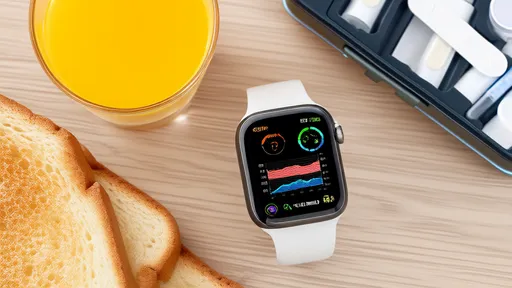
In a groundbreaking development that could redefine personal health management, Apple has reportedly secured FDA approval for a revolutionary new feature in its Apple Watch: non-invasive blood glucose monitoring. This long-awaited advancement promises to transform how millions of people track their metabolic health, particularly those managing diabetes. While Apple has remained characteristically tight-lipped about specific release timelines, industry insiders suggest this technology may debut within the next two generations of Apple Watch.
Health

The myth of vitamin D supplements shattered: excessive intake can lead to bone loss, and sun exposure is the key

By /Jun 11, 2025

For decades, vitamin D has been touted as a miracle supplement, promising stronger bones, improved immunity, and even protection against chronic diseases. Walk into any pharmacy, and you’ll find shelves lined with vitamin D bottles in various potencies, often marketed as essential for optimal health. But emerging research is challenging this widespread belief, revealing a troubling paradox: excessive vitamin D supplementation might actually weaken bones rather than strengthen them. The science is shifting the narrative, emphasizing that sunlight—not pills—remains the body’s most natural and effective source of this critical nutrient.
Health

Has the concept of light fasting been overturned? JAMA study: 16:8 diet may increase risk of cardiovascular death

By /Jun 11, 2025

In recent years, intermittent fasting has gained immense popularity as a weight-loss and health-boosting strategy. Among its various forms, the 16:8 method—where individuals fast for 16 hours and eat within an 8-hour window—has been widely adopted. However, a groundbreaking study published in JAMA has cast doubt on its safety, suggesting a potential link between this eating pattern and an increased risk of cardiovascular death.
Health

Muscle mass determines lifespan! Accelerated muscle loss after the age of 40, urgent 'rescue' of three types of food

By /Jun 11, 2025

For decades, medical professionals have focused on weight management and cardiovascular health as primary indicators of longevity. However, emerging research reveals a surprising predictor of lifespan that often goes overlooked - skeletal muscle mass. Studies now show that muscle quantity and quality may be equally important as cholesterol levels or blood pressure when it comes to determining how long and how well we live.
Health

Is it useless to catch up on sleep after staying up late? Science reveals the permanent damage of sleep deprivation to the brain

By /Jun 11, 2025

The notion that we can simply "catch up on sleep" after burning the midnight oil has been deeply ingrained in modern culture. Many believe that a few extra hours of shut-eye on the weekend can undo the damage of weekday sleep deprivation. However, groundbreaking research published in Science suggests that this assumption may be dangerously misguided. The study reveals that chronic sleep loss can cause permanent damage to the brain, challenging our fundamental understanding of sleep's role in cognitive health.
Health

Cambridge Study Reveals: Just 11 Minutes of Daily Brisk Walking Can Slash Mortality Risk by 25%

By /Jun 11, 2025

The age-old question of how much exercise we truly need has received a groundbreaking answer from Cambridge University researchers. Their latest study, shaking the foundations of conventional fitness wisdom, demonstrates that a mere 11 minutes of brisk walking each day could reduce premature death risk by an astonishing 25%. This finding challenges decades of exercise guidelines and offers hope for time-crunched individuals struggling to meet traditional activity recommendations.
Health

Groundbreaking Fecal Transplant Study Shows Promise in Treating Depression

By /Jun 11, 2025

In a medical first, researchers have reported significant improvement in a patient with treatment-resistant depression following fecal microbiota transplantation (FMT). The case study, published in Nature Mental Health, has sent shockwaves through the psychiatric community and opened new avenues for understanding the gut-brain axis.
Health

Cancer vaccine breakthrough! MRNA technology successfully targets melanoma, doubling 5-year survival rate

By /Jun 11, 2025

The field of oncology has witnessed a groundbreaking advancement with the recent success of mRNA-based cancer vaccines in treating melanoma. Researchers report a doubling in five-year survival rates among patients who received the experimental therapy, marking a pivotal moment in the fight against one of the most aggressive forms of skin cancer.
Health

Scientists Discover New 'Longevity Gene' Target: Human Lifespan Could Be Extended by 30%

By /Jun 11, 2025

In a groundbreaking study published in Nature, researchers have identified a novel genetic target that could potentially extend human lifespan by up to 30%. The discovery has sent ripples through the scientific community, offering new hope for age-related disease prevention and longevity interventions. Unlike previous findings in model organisms, this research directly highlights mechanisms that may be translatable to humans.
Health

The surge of cases of lung disease caused by electronic cigarettes: health traps under the fashionable coat

By /Jun 11, 2025

The sleek designs and fruity flavors of e-cigarettes have long been marketed as a safer alternative to traditional smoking, but a surge in vaping-related lung injuries has shattered that illusion. What was once touted as a trendy habit is now under scrutiny as hospitals report alarming cases of severe respiratory illnesses linked to vaping. The rising toll of affected individuals—many of them young and otherwise healthy—has forced health experts to confront the hidden dangers lurking beneath the vapor.
Health

Microplastics invade the human placenta! Can bottled water still be consumed?

By /Jun 11, 2025

The discovery of microplastics in human placentas has sent shockwaves through the scientific community and raised urgent questions about our daily consumption habits - particularly regarding bottled water. Researchers first identified these plastic particles in placental tissue in 2020, and subsequent studies have only deepened concerns about what this means for fetal development and human health.
Health

Does AI diagnostic accuracy surpass that of human doctors? The Data Privacy Dilemma Behind the Medical Revolution

By /Jun 11, 2025

The rapid advancement of artificial intelligence (AI) in healthcare has ushered in a new era of medical diagnostics, with algorithms now outperforming human doctors in certain areas. From detecting cancers in radiology scans to predicting patient outcomes with startling accuracy, AI-driven tools are transforming how diseases are identified and treated. Yet, beneath the promise of this technological revolution lies a thorny ethical dilemma: the trade-off between improved healthcare and the erosion of patient data privacy.
Health

Five years after the exposure of gene edited baby experiments: How does CRISPR technology balance ethics and redemption?

By /Jun 11, 2025

Five years after the world first learned of He Jiankui’s controversial gene-edited babies, the scientific community remains deeply divided over CRISPR’s ethical boundaries. The Chinese biophysicist’s unauthorized experiment, which altered the DNA of twin girls to confer HIV resistance, ignited a firestorm of condemnation and soul-searching. Today, as CRISPR therapies advance toward clinical use for devastating genetic diseases, researchers grapple with an urgent question: Can this revolutionary tool redeem itself from the shadow of unethical human experimentation?
Health

The phenomenon of 'quiet resignation' in the workplace is spreading: mental health has become the primary reason for Z generation resignations

By /Jun 11, 2025

The modern workplace is undergoing a silent revolution, one that doesn’t involve picket signs or vocal demands but rather a quiet, almost imperceptible withdrawal. Termed "quiet quitting," this phenomenon has spread like wildfire among Generation Z employees, who are redefining their relationship with work. Unlike traditional resignations, quiet quitting doesn’t involve dramatic exits or heated confrontations. Instead, it manifests as a psychological retreat—employees fulfill their basic job requirements but disengage from the hustle culture that once defined professional success. At the heart of this movement lies a growing prioritization of mental health, a shift that is forcing companies to rethink their approach to employee well-being.
Health

Social media addiction reshapes the brain? Scientists reveal the source of anxiety for the 'screen brushing generation'

By /Jun 11, 2025

The glow of smartphone screens has become the modern campfire around which we gather, yet this constant connection may be rewriting our neural circuitry in ways we're only beginning to understand. Neuroscientists are uncovering disturbing parallels between social media engagement patterns and the brain changes observed in substance addiction, raising urgent questions about how our digital diets shape cognition and emotion.
Health

Navigating the Path to Adolescent Mental Health: Challenges and Opportunities in China's New Depression Screening Policy

By /Jun 11, 2025

The recent decision to include depression screening in routine physical examinations for adolescents has sparked widespread discussion across China. This policy shift reflects growing awareness of mental health issues among teenagers, often referred to as the "common cold of the soul" due to their prevalence yet frequent dismissal. Behind this public health measure lies a complex web of societal pressures, educational demands, and family dynamics that contribute to the mental wellbeing crisis facing China's youth.
Health

'996' Sudden Death Frequent: In the Age of Overwork, Your Heart is Silently Seeking Help

By /Jun 11, 2025

The fluorescent glow of computer screens burns late into the night across China's tech hubs as programmers tap away at keyboards, chasing deadlines in a grueling race against time. What began as an unofficial industry practice has snowballed into a cultural phenomenon with deadly consequences – the "996" work schedule (9am to 9pm, six days a week) is literally squeezing the life out of China's workforce.
Health

New breakthrough in Alzheimer's disease: blood testing warning 15 years in advance, how far is the dawn of cure?

By /Jun 11, 2025

In a groundbreaking development that could revolutionize the diagnosis and treatment of Alzheimer's disease, scientists have made significant strides in predicting the condition up to 15 years before symptoms appear. This breakthrough hinges on a simple blood test, offering hope for early intervention and potentially slowing the progression of this debilitating neurodegenerative disorder. The implications are profound, not only for patients and their families but also for healthcare systems grappling with the escalating costs of dementia care.
Health

Youth crisis of diabetes: patients under 30 years old doubled in ten years, and invisible sugar became the culprit

By /Jun 11, 2025

The global health landscape is witnessing a disturbing trend: diabetes, once considered a disease of middle and older age, is now striking the younger population with alarming frequency. Over the past decade, the number of individuals under 30 diagnosed with diabetes has doubled, sending shockwaves through medical communities and public health organizations. This silent epidemic, fueled by hidden sugars and modern lifestyles, threatens to redefine the future of an entire generation.